
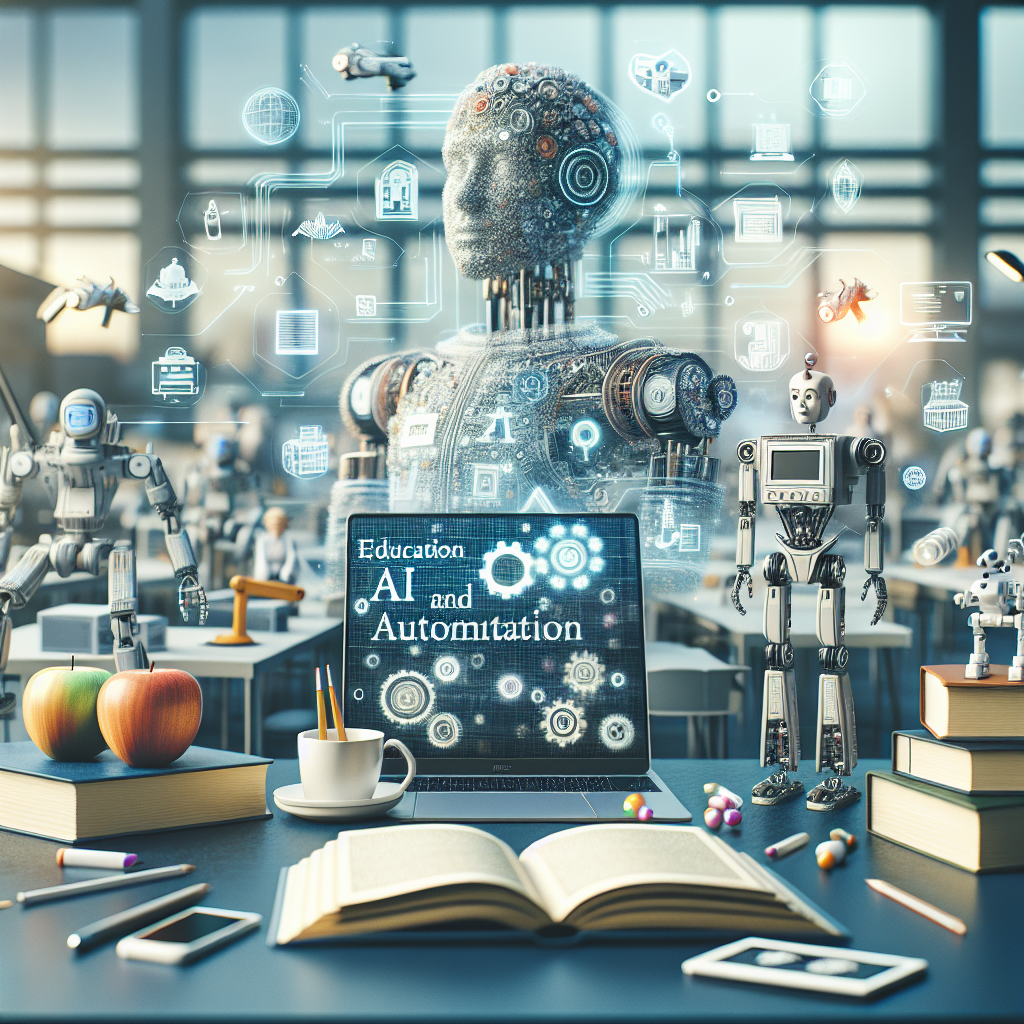
How Education Is Influencing AI & Automation in 2025
Artificial Intelligence (AI) and automation are evolving rapidly in 2025, reshaping industries and professional landscapes. But behind these technological leaps lies a crucial enabler: education. From curriculum redesigns to skill development, education systems are driving how effectively societies adapt to and direct these innovations. This article explores how education is shaping the AI and automation revolution in meaningful ways.
The Role of Education in Shaping AI-Ready Talent
In 2025, education systems are no longer just consumers of technology—they are active participants in its creation and deployment. Schools, universities and vocational institutions are embedding AI and automation into curricula not only as subjects of study but as foundational tools for learning itself. This integration is fostering a new generation of developers, thinkers and problem-solvers who are fluent in machine learning, data analytics and human-computer interaction.
Universities in Australia are leading the charge by forming multi-disciplinary programs that blend computer science with ethics, communication and sociology. These programs aim to produce well-rounded AI professionals who not only build intelligent systems but also understand their broader impact on society. Meanwhile, primary and secondary education are adopting AI-powered platforms for personalised learning, helping students improve in real time with interactive feedback loops.
The transition also reflects a shift from memorisation to problem-solving. Students are encouraged to work on real-world projects using AI tools to simulate complex systems, craft algorithms and even predict social trends. As educational focus moves toward critical thinking, students naturally develop a mindset poised for innovation in machine-driven environments.
Education as the Ethical Compass of Automation
While technical skills are essential, the human elements of AI and automation cannot be overlooked. Education in 2025 serves as a moral and ethical compass, preparing students not just to create intelligent systems but to consider their social consequences. The rise in AI ethics courses illustrates how deeply institutions are investing in socially responsible innovation.
Topics like algorithmic bias, data privacy and equitable access to automation tools are now central to educational dialogues. Graduate and postgraduate programs often include mandatory training on responsible AI development, ensuring future engineers and policymakers are equipped to mitigate unintended consequences. This is especially important in Australia, where public trust in technology is closely linked to transparency and ethical practice.
In vocational training arenas, the focus expands to retraining and upskilling workers displaced by automation. Tailored AI modules are helping workers transition from declining job sectors into emerging fields like robotic maintenance, AI model training and data security. Such programs represent how education systems are not only producing new AI talent but also supporting a broader social adaptation to technological change.
Conclusion
By 2025, education has become a cornerstone of the AI and automation revolution. Through curriculum transformation, ethical grounding and inclusive skill development, educational institutions are shaping how nations embrace and direct technological change. As AI continues to evolve, it is clear that the success of this transformation depends not only on algorithms but on how we prepare people to create and coexist with them.